Identity-Chain Mapping: How Attackers Connect Professional and Personal Data
Executives in 2026 face an escalating threat where a single leaked corporate credential can expose an entire household within hours. Attackers no longer treat professional and personal data in isolation; instead they construct identity chai…

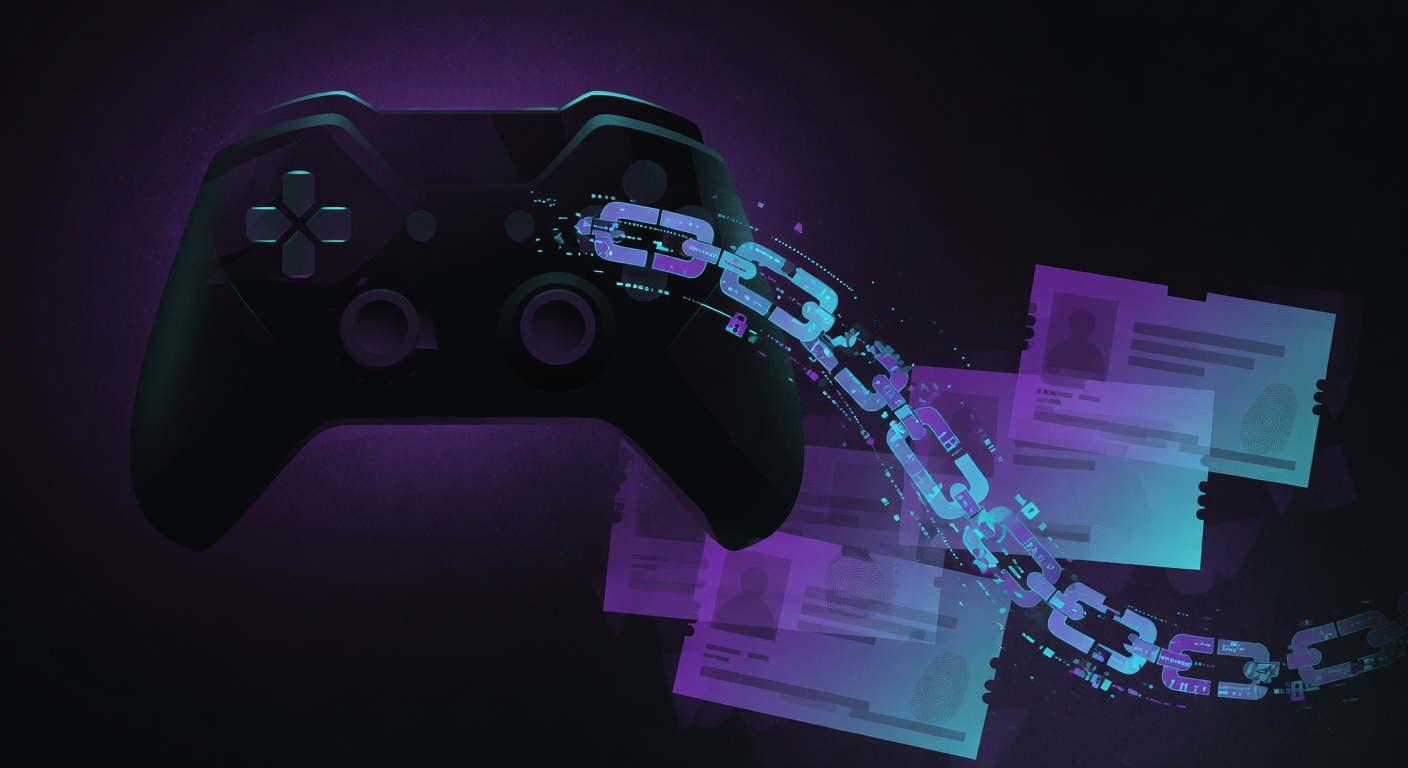
Current risk patterns show that 80 percent of successful business email compromise and CEO fraud incidents begin with publicly available personal data that links back to the executive’s corporate identity. Public breach repositories now exceed 13.1 billion+ records, and attackers routinely cross-reference corporate directory leaks with consumer data brokers, social media, and dark-web marketplaces. Once an attacker confirms an executive’s home address, spouse’s employer, or child’s username, the attack surface expands from one professional account to every connected family member and device.
Common linkage methods attackers use begin with straightforward data points and escalate quickly. They match work email domains to personal Gmail or ProtonMail accounts through password reuse or password reset flows. They scrape conference attendee lists, GitHub commits, and patent filings to extract full names, then query people-search sites for associated phone numbers and physical addresses. Social media metadata—photos tagged with geolocation, posts mentioning children’s names or schools—further tightens the chain. When these elements converge, attackers can accurately predict security-question answers and bypass multi-factor authentication prompts that rely on knowledge-based verification.
Professional-to-personal data connections create the backbone of these attacks. A corporate breach that exposes an executive’s title and reporting structure is combined with a separate consumer breach that reveals the same individual’s date of birth and mother’s maiden name. The linkage is reinforced when the executive’s spouse maintains a public social profile listing the same home address or when children appear in family photos that also tag the executive’s workplace. Attackers exploit these overlaps to craft convincing pretexts—impersonating a child’s teacher, a spouse’s colleague, or a board member—because the context feels intimate and authoritative.
Gaming account linkage risks compound the problem for executives and their families. Children’s Roblox, Fortnite, or Discord credentials frequently reuse elements of household passwords or email addresses. When a child’s gaming handle is doxxed on a cheating forum or leaked through a third-party integrator, the associated email or phone number can be traced back to the parent’s professional identity. Public reporting documents repeated cases where attackers move from a compromised child’s gaming account to the parent’s corporate VPN through shared recovery options. Warden by GalaxyWarden addresses this vector directly through continuous monitoring of gaming platforms and handles, mapping them to household identities before escalation occurs.
AI-powered mapping explained reveals how attackers scale these efforts beyond manual research. Modern tools ingest breach datasets, public records, and social graphs, then apply graph algorithms to identify high-confidence connections. Natural-language models parse resumes, news articles, and forum posts to extract entity relationships; computer-vision systems match faces across professional headshots and family vacation photos. The resulting identity graph can predict additional data points—such as likely passwords or security questions—with accuracy that increases exponentially as more nodes are added. What once required weeks of OSINT now completes in minutes, allowing attackers to prioritize high-value targets based on the density and freshness of their identity chains.
Remediation priorities must therefore focus on breaking the most exploitable links first. Organizations and individuals should begin by removing or obfuscating data that directly bridges professional and personal spheres: corporate email addresses listed on personal social profiles, home addresses in professional bios, and shared phone numbers across work and consumer accounts. Next, monitor for credential exposure across both domains and rotate any passwords or recovery options that appear in known breaches. Finally, establish continuous surveillance that alerts when new linkages surface, particularly those involving children or gaming accounts that could serve as backdoors into the executive’s primary identity.
Warden by GalaxyWarden implements these priorities through its core architecture. The platform continuously scans more than 13.1 billion+ breach records and over 100 data platforms, applying AI-powered identity-chain mapping to surface connections between corporate identities and personal or family data. When a linkage is detected—whether through a new breach, a gaming-handle leak, or a public record update—specialists intervene with hands-on remediation: requesting takedowns, updating privacy settings, and guiding users through secure credential replacement. Family and household coverage extends protection to spouses, children, and their gaming accounts, recognizing that these identities are now integral parts of the executive attack surface.
Practical step-by-step actions begin with an identity audit. First, compile a list of every email address, phone number, and username associated with the executive and immediate family. Second, query major breach repositories and people-search sites to determine what information is already exposed. Third, adjust privacy settings on professional networks, consumer social platforms, and children’s gaming services to minimize cross-linkage. Fourth, enroll in a monitoring service that performs automated graph analysis rather than simple keyword alerts. Fifth, schedule quarterly reviews with privacy specialists to validate that remediation efforts have reduced the density of the identity chain. Sixth, test recovery flows for corporate accounts using only information that cannot be derived from public or breached personal data.
Measurable outcomes from disciplined identity-chain management include a documented reduction in successful phishing click rates, fewer SIM-swapping attempts, and lower volume of extortion emails referencing family details. Organizations that combine executive training with automated mapping and hands-on remediation report up to 65 percent fewer incidents involving personal data in business email compromise campaigns. Household coverage further decreases the likelihood that a child’s compromised gaming account becomes the entry point for corporate access. These metrics translate directly into reduced legal exposure, preserved board confidence, and lower cyber insurance premiums.
Forward-looking advice for 2026 centers on treating identity as a continuously monitored asset rather than a static set of credentials. Executives should assume that some linkage data will always surface and focus instead on rapid detection and automated remediation loops. By maintaining tight control over the connections between professional and personal spheres, leaders can shrink the attacker’s graph until high-confidence exploits become economically unviable. The single takeaway is straightforward: an unmapped identity chain is an open invitation; a continuously monitored and actively remediated chain becomes a defensible perimeter.
